Showing posts with label waste. Show all posts
Showing posts with label waste. Show all posts
Tuesday, January 27, 2009
eWaste recycling in South Africa
14 comments
:
Tags:
electronics
,
recycling
,
south africa
,
waste
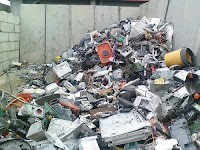
eWASA, the eWaste Association of South Africa, is an organisation concerned with the handling of eWaste and represents the various industry stakeholders (like eWaste recyclers and disposers). Their website provides useful information about where to recycle your eWaste and how the eWaste recycling process works. They also have a really fascinating (and distrubing) list of hazardous substances and what items those substances are contained in. I recommend that everybody read that list (compulsory reading for engineers and product developers).
Refurbishing, reuse and extending the life–cycle of electronic products is an important (and preferable) way to reduce eWaste and the hazards associated with recycling and disposing of these products.
eWaste recycling is expensive and the costs are not necessarily covered by the resale of recovered materials. eWASA would like to introduce an advanced recycling fee (ARF) for products which will eventually become a part of the eWaste stream. This fee will be collected by the supplier at the time of sale and used to fund end–of–life recyling. Exactly how the ARF will be collected and distributed is not yet clear. Will certain items, such as CRTs, attract a higher ARF due to greater recycling costs? We will have to wait and see.
South Africa currently has no legal framework which deals specifically with eWaste, and unlike the EU's RoHS directive, we have no laws to govern the materials used in the products that we make. I have been quite surprised in my dealings with manufacturers of printed circuit boards and assembly houses that they even still offer leaded products (because people are still using them). There are many benefits in removing these hazardous substances from your product and any issues with the alternative lead–free options have already been resolved. It is our responsibility as designers to remove these substances from our products. South Africa should introduce legislation to govern the use of hazardous materials so that we can avoid future health crises.
We need more people to be aware of, and start recycling eWaste. Fortunately Makro and Fujitsu–Siemens have partnered together with an eWaste recycler, Desco Electronic Recyclers, and begun providing eWaste collection bins in some of their stores. This will help to create awareness of how to correctly handle and recycle eWaste. eWASA's website has a full list of eWaste collection points in South Africa.
Please design and recycle wisely – it is good for you, me, and our environment.
Photo courtesty of Stephen Bullivant, licensed under a creative commons license.

Tuesday, October 14, 2008
Efficiency is the goal
3 comments
:
Tags:
efficiency
,
energy efficiency
,
environment
,
recycling
,
waste
Nature strives towards efficiency. Efficiency can be defined as any waste which occurs in achieving a goal, or, "The ratio of the effective or useful output to the total input in any system."
Efficiency is the perfect use of material. Packaging is inefficient, as the "goal" is what is inside the package, while the packaging becomes waste. Packaging can be efficient if it is reused, as it never exits the system. Recycling requires extra energy, and is therefore less efficient than reusing, but more efficient than throwing away packaging. Using less to achieve the same is material efficiency. Smaller products, less packaging, lower material consumption. Have you ever considered how you could design exactly the same thing but smaller? Electronic engineers, think about small 0402 or 0201 size resistors over larger ones – in most cases they are functionally equivalent, but use less material and require less space on a PCB.
Efficiency is the perfect use of fuel. Internal combustion engines are around 20% efficient – that means 80% of the energy you put into your car is wasted. If cars were 100% efficient they would have zero emmissions and generate no heat. Did you know that cycling is the most energy efficient mode of transport?
Efficiency is the perfect use of water. Polluting potable water with waste such as sewerage and chemical cleaners requires energy and further chemicals to restore the water to a usable state. Efficient water usage means reducing consumption and leaving it in a usable state. Reducing waste and chemicals entering the water system means more efficient processing of water. Processing waste on site (composting toilets, greywater systems) reduces both waste and water consumption.
Solar energy is time efficient. Oil and natural gasses are the result of thousands of years of energy from the sun. Using the sun directly is an efficient time short cut.
Increasing crop yields makes more efficient use of space. Decreasing the use of fertilizers moves towards the perfect balance of an efficient ecosystem. Growing food near where it will be consumed is transport efficient. All our environmental goals centre around efficiency.
We need to learn from nature – waste nothing, strive towards perfect efficiency.
Read More
Efficiency is the perfect use of material. Packaging is inefficient, as the "goal" is what is inside the package, while the packaging becomes waste. Packaging can be efficient if it is reused, as it never exits the system. Recycling requires extra energy, and is therefore less efficient than reusing, but more efficient than throwing away packaging. Using less to achieve the same is material efficiency. Smaller products, less packaging, lower material consumption. Have you ever considered how you could design exactly the same thing but smaller? Electronic engineers, think about small 0402 or 0201 size resistors over larger ones – in most cases they are functionally equivalent, but use less material and require less space on a PCB.
Efficiency is the perfect use of fuel. Internal combustion engines are around 20% efficient – that means 80% of the energy you put into your car is wasted. If cars were 100% efficient they would have zero emmissions and generate no heat. Did you know that cycling is the most energy efficient mode of transport?
Efficiency is the perfect use of water. Polluting potable water with waste such as sewerage and chemical cleaners requires energy and further chemicals to restore the water to a usable state. Efficient water usage means reducing consumption and leaving it in a usable state. Reducing waste and chemicals entering the water system means more efficient processing of water. Processing waste on site (composting toilets, greywater systems) reduces both waste and water consumption.
Solar energy is time efficient. Oil and natural gasses are the result of thousands of years of energy from the sun. Using the sun directly is an efficient time short cut.
Increasing crop yields makes more efficient use of space. Decreasing the use of fertilizers moves towards the perfect balance of an efficient ecosystem. Growing food near where it will be consumed is transport efficient. All our environmental goals centre around efficiency.
We need to learn from nature – waste nothing, strive towards perfect efficiency.
Tuesday, September 30, 2008
Breaks
3 comments
:
Tags:
duncan drennan
,
energy efficiency
,
south africa
,
waste
I am sure you have been in that situation where you are struggling to solve some problem, and then you take a break (maybe a nap or shower) and suddenly – WHAM – the solution hits you right between the eyes. Our minds are in continual process even when we are not aware of it.
Taking breaks changes us. Long or short, they matter because we allow ourselves to change the focus of our minds, and that change in focus allows us to think more clearly about all the other things. When we are deeply involved in something (be it a hard problem or the daily matters of life) our perspective narrows and taking a break helps to open up our perspective – we get a new view on the world.
I have been able to take a long break from life and travel in the USA for a month. Travel always changes our perspective, and this trip gave me much to think about. Returning to my business and normal life probably gave me even more to think about. For the next while I will be focussed on some engineering design and process issues that I think can be improved upon, but I will continue to discuss the environment and how we and engineering interact with it.
For now, some thoughts on my USA trip:
Read More
Taking breaks changes us. Long or short, they matter because we allow ourselves to change the focus of our minds, and that change in focus allows us to think more clearly about all the other things. When we are deeply involved in something (be it a hard problem or the daily matters of life) our perspective narrows and taking a break helps to open up our perspective – we get a new view on the world.
I have been able to take a long break from life and travel in the USA for a month. Travel always changes our perspective, and this trip gave me much to think about. Returning to my business and normal life probably gave me even more to think about. For the next while I will be focussed on some engineering design and process issues that I think can be improved upon, but I will continue to discuss the environment and how we and engineering interact with it.
For now, some thoughts on my USA trip:
- America has a throw away culture. Everything is paper, plastic and polystyrene and meant to dumped after using. Restaurants, coffee shops, rest rooms and homes – waste is everywhere. Americans generate far more waste than South African's do.
- I did not see energy saving bulbs anywhere (except my brother's house). Energy crisis? What energy crisis?
- When we see stats and numbers about waste and energy usage they are typically based on American studies. Due to the the above points it may not be fair to impose those numbers on South Africa. That means we need our own numbers, and our own measures. Using the US yardstick against ourselves will yield false results.
- We need to make sure we move towards a culture of efficiency, reuse and longevity – away from a culture of waste.
- It is hard to get a decent cappuccino. It is even harder to get it in a ceramic cup (I learnt to ask for a "to stay" cup on my last day).
- We need to learn how to be patient on the road. The Americans are really patient and courteous drivers. Most people's instant reaction would be that they have more policing. Is it more, or is it the style that matters? Also, do we really need to be policed to behave well?
- You can get just about anything you can think of (except a decent cappuccino).
- Nobody really knows or cares what happens in South Africa. We fool ourselves when we think our economic fortunes are closely tied to our political situation.
- South Africa has a soul, character and diversity which I am absolutely ecstatic to come home to.
Monday, April 14, 2008
Creating a culture of reuse
1 comment
:
Tags:
environment
,
recycling
,
reuse
,
waste
 Reuse is the forgotten R of the three R's.
We currently have a materials chain that goes something like this: harvest resource, manufacture, distribute, use, dispose.
Recycling adds an extra step where things are collected during disposal and reintroduced into the manufacturing stage as raw materials. There are two things about recycling that need to be noted:
- Many materials are unsuitable to be recycled into the same thing. Plastics are probably the best example. They are either used to supplement the virgin (new) feedstock, or made into entirely different products (e.g. PET from drinking bottles is recycled into clothes, insulation, credit cards, etc.)
- Recycling often involves breaking down the product into something as close as possible to the original feedstock. This means that all the energy that went into it is lost. Glass is a good example.
The things that I have read about reuse have all been focussed on reusing items in the home and giving or selling them to other people who can use them (which are both important).
I want to see industry take responsibility and start collecting items for reuse, rather than recycling (wherever possible). We have seen this happening our whole lives: glass soda bottles. Every time you took a glass soda bottle back to the store and had your deposit paid back you were putting a bottle into the reuse chain.
The reuse chain works like this: instead of disposing of something it is taken back to the distributor (the store it was bought from). When the manufacturer makes deliveries they also collect the items for reuse. At the factory the items are inspected and cleaned. Any items that are unsuitable for reuse are recycled, and the rest is reused.
This means far less energy is expended on recycling and manufacturing new items which could have been reused. The easiest thing to imagine this working with is glass bottles and jars of any type, but why not expand this to everything? Why not start designing reuse into our products?
There would be huge savings for manufacturers, as they would not need to keep buying new materials. The only costs are the collection and logistics, which are already in place for the distribution of the product.
Packaging is a great example. If packaging can be made durable enough to be reused multiple times then consumers could just keep returning that packaging until it reached the end of its life cycle.
It does require a rethink of how we design, package and distribute things, but the benefits would be great for everyone – both manufacturers and consumers.
Wednesday, March 05, 2008
Degradable plastic
5 comments
:
Tags:
environment
,
plastic
,
recycling
,
solutions
,
waste
 I recently bought some apples and spotted an intriguing little logo on the back of the plastic packaging. I look carefully at just about all plastic packaging these days in an attempt to identify what type of plastic it is (and therefore how recyclable).
What I found was a bit different to what I was expecting. Below a little logo was a website reference, www.degradable.net. So, off to the website to find out what this was all about.
It turns out that these smart guys have developed a low cost additive for polyethylene and polypropylene which causes the plastic to break down into a biodegradable form (the long plastic chains break down into shorter chains which can then be accessed by micro organisms which break them down to carbon dioxide and water. You can read the full details on their site). Astrapak are the South African suppliers of these plastics. There are also some alternatives to the d2w process which make use of light sensitive, or starch additives.
 The great benefit of this is that plastics which are disposed degrade much faster (they can be set to degrade after 60 days or up to 6 years later). One of the issues that this technique creates is that it impacts on recycling. The degradable plastic can be recycled, but in their words, "..there are many different and complex permutations of both input feedstock and output materials which need to be individually considered," i.e. it's complicated. It seems like it is easier to create recycled material that is degradable, while creating non–degradable recycled products is trickier.
This seems like a big disadvantage, but according to the EIA only 5% of plastics produced in America are recycled (I am sure that figure is much lower for South Africa). That means that up to 95% of the plastic produced ends up in land fills, water ways and generally strewn around the country side. At least using degradable plastics means that they will have a smaller, and shorter impact on our environment.
 I am sure that a lot of people would rather argue the case for bioplastics. Personally I have always been sceptical of the benefits of bioplastics (and biofuels), mainly due to the pressure they place on food prices. More recently there have been some studies revealing that biofuels may damage the environment more [1][2] than emissions due to conventional fuels (bioplastics come from the same process, and therefore have a similar impact). So bioplastics may not currently have all the benefits that they claim.
Degradable plastic is a great product due to its reduced impact on the environment, but we do need to examine how we use and dispose of plastics. The reality is that plastic feedstock (oil) is a limited resource [3] and we need to use it wisely. Biofuels and bioplastics may not be the panacea that many people have hoped for. Only a small percentage of plastics are recycled. Plastics that are recycled are typically used to make other products rather than replace the recycled product, which means virgin feedstock is constantly required.
The real long terms solution is to reduce the amount of plastic we use, as well as reuse it as much as possible, and to continue recycling when a product reaches the end of its lifetime. So, in my mind, the question is this: how do we create plastic products with longer lifetimes? That is what really needs to change.
References:
[1] "Use of U.S. Croplands for Biofuels Increases Greenhouse Gases Through Emissions from Land Use Change" by Timothy Searchinger, et al.
[2] More on the negative impacts of biofuels.
[3] According to Waste Watch,
"It is estimated that 4% of the world's annual oil production is used as a feedstock for plastics production and an additional 3-4% during manufacture."
Tuesday, February 26, 2008
Build a better way
1 comment
:
Tags:
design
,
engineering
,
environment
,
recycling
,
waste
I finally got around to watching "The Story of Stuff" and was absolutely blown away by the compelling and simple way that its message is presented. Spend 20 minutes of your time to watch this video (here, on the site, or download it)
It is really important that this message gets spread, as we all have a role to play in fixing what we have helped to create. As consumers we need to change how we purchase, as engineers we need to change how we create, as marketers we need to change the message that we spread.
There are some things we need to carefully consider. Take this comment from the brilliant Seth Godin,
Does what we create help people to live a better happier life? Does it protect the precious world we live in? We have a great responsibility when we create, market and sell things – we need to make sure we carry that responsibility well.
And then the final line of the video,
We have created the system that we currently have. Does the current system protect our world? Does it help us to be happier? I don't think so.
Even though some people may think "there is no other way" we have to remember this: we created this system, and we can create a new one. We can find a new way.
Further reading:
[1] Happiness versus consumption on No Impact Man
[2] Sustainable consumption's "double dividend" on No Impact Man
[3] Slower consumption by Dr Tim Cooper – Journal of Industrial Ecology (via No Impact Man)
Read More
It is really important that this message gets spread, as we all have a role to play in fixing what we have helped to create. As consumers we need to change how we purchase, as engineers we need to change how we create, as marketers we need to change the message that we spread.
There are some things we need to carefully consider. Take this comment from the brilliant Seth Godin,
"So I'm hoping that what you make is worthy. Marketing is a powerful tool especially when it associates a product with a desire and instinct we already have."
Does what we create help people to live a better happier life? Does it protect the precious world we live in? We have a great responsibility when we create, market and sell things – we need to make sure we carry that responsibility well.
And then the final line of the video,
"Remember that old way didn’t just happen by itself. It’s not like gravity that we just gotta live with. People created it. And we’re people too. So let’s create something new."
We have created the system that we currently have. Does the current system protect our world? Does it help us to be happier? I don't think so.
Even though some people may think "there is no other way" we have to remember this: we created this system, and we can create a new one. We can find a new way.
Further reading:
[1] Happiness versus consumption on No Impact Man
[2] Sustainable consumption's "double dividend" on No Impact Man
[3] Slower consumption by Dr Tim Cooper – Journal of Industrial Ecology (via No Impact Man)
Sunday, October 07, 2007
It's fill packaging, just better
1 comment
:
Tags:
environment
,
recycling
,
waste

I recently received some samples from Texas Instruments and was pleasantly surprised — actually blown away — by their fill packaging. Blown away by fill packaging? Let me explain...
Most of the fill packaging I have seen before normally involved polystyrene "chips" — basically plastic. What happens to those polystyrene chips normally? Well, expanded polystyrene is considered uneconomical to recycle[1] (in South Africa at least[2]) and ends up in landfills (or strewn around the countryside, waterways, etc.)
So I take out my samples and they are wrapped in paper — not just any paper, but a special expanded paper. Lucky for me, the manufacturer was smart enough to put their website onto the packaging: www.geami.com.
 Go check it out. It is paper with little slits cut into it. The slits cause the paper to expand when removed from the roll. This is a really great way to avoid bubble wrap, polystyrene chips, and other plastic packaging. They have some videos and cost comparisons that are worth checking out. If TI is using them for the free samples they ship all over the world (and most likely everything that they ship), then that alone must imply that this packaging is a good and viable option.
Other than the direct advantages of the Geami packaging, it can also be transported in its unexpanded form, which reduces the toll that transportation has on the environment.
The beauty of this product is that it is a simple and elegant packaging solution that is easily recyclable and improves not just the environmental friendliness of the packaging, but ALSO reduces the cost. A great example of engineering simplicity.
There are some other alternatives to polystyrene which are similar, but made from biodegradable compounds. It is hard to compare these with polystyrene because I do not know enough about them, but there are a couple of questions that come to mind (if anyone can answer these for me, please do):
- How do these products compare on cost?
- What is the impact of bioplastics on food prices? (I believe this is a big issue with biofuels and bioplastics)
- How recyclable are they? (recycling is generally better than allowing them to degrade in landfills)
[1]From The Plastics Federation of South Africa (scroll to the part about "The Plastics Recyling Sequence" and find polystyrene),
"The polystyrene mostly seen is the white, very light, friable, expanded or foamed polystyrene (PS-E). Although this material is recyclable it has such a large volume to mass ratio that it is completely uneconomical to transport and recycle at present."Also see polystyrene recycling on Isolite's website.
[2]Notice how expanded polystyrene products are absent from the list of recyclables for Cape Town, and on the non–recyclable side for Johannesburg.
Technorati tags : environment, recycling, waste, packaging, paper
Subscribe to:
Posts
(
Atom
)
Subscribe

About this blog

I'm Duncan Drennan and this blog is about spreading ideas regarding engineering, our environment and creating a better world. You can also follow me on Google Reader.
Popular Posts
-
 We are in the middle of an energy crisis and each of us need to make some dramatic changes to ensure that we have electricity, and that the ...
 -
 As engineers we spend a lot of time solving problems. A customer has a problem and it needs to be fixed. The electronic boards you have just...
 -
 eWaste is a particularly difficult issue to deal with as it contains many different materials and lots of extremely hazardous substances. I...
 -
 The short version (my "elevator pitch"): Compact fluorescent lamps (CFLs) use about a fifth of the energy of a normal (incandescen...
 -
 With 48 post over nearly three years, I am certainly not a prolific blog writer. My goal has never been to write a lot, but to rather explor...
 -
 Electronic design automation tools like OrCAD , PADS and Altium Designer are part of an electronic engineer's day–to–day life. We need...
 -
 I am an advocate of making sure that every device consumes as little power as possible at all times. Indicator lights should be off, process...
 -
 Mercury in compact fluorescent tubes (CFLs) is a health hazard and therefore we should not use CFLs....at least that is the false message b...
 -
 I think that it is worth trying to understand some of the reasons we are heading towards a food crisis . The result of all of this deregulat...
 -
The advert ends with the line, "The walls between art and engineering exist only in our minds." There are a couple of ways to inte...