Friday, May 29, 2009
What we can't imagine
[Cellphone cameras came into being when Philippe Kahn wanted to instantly share photos of his daughter's birth with friends and family.]
40 years ago it was hard (impossible?) to imagine the solutions that we have available to us today. Some of the things we think will have happened in another 40 years time probably won't, and other things that we have no idea about will be in existence. Hard working engineers and scientist will have discovered and created all kinds of new things.
What can you imagine that no one else can?

Thursday, March 12, 2009
You make what you measure
Paul Graham referred to an interesting statement in a recent essay, "You make what you measure." And what is it that we measure? GDP – gross domestic product – a measure of a country's consumption. One of the goals of our incumbent economic system is to keep growing GDP, which is to keep producing more and more, which in turn means to continuously grow consumption. So we measure consumption and we create consumers.
We don't measure happiness, we don't measure how much water is available, we don't measure how much we waste, we measure consumption. Imagine how much would change if our leading indicator was the measure of people's happiness. If you want to know, look at the city of Bogota.
To support our current economic system we seek out ways to create more consumption. Disposable paper cups, nappies, razor blades, and more. Even our "durables" have become disposable – replacement is so cheap...and it is encouraged.
We are left with a world spiralling out of control. We put pressure on our environment to produce more and more so that we can consume more and more. And in the mean time we are not getting happier or healthier.
To stop this we have to fight to regain our humanity. We can no longer accept being referred to as consumers – we are people: mothers, fathers, brothers, sisters, children. We are more than consumers: we are creators, artists, workers, partners – we are human.
We need to stop measuring ourselves as consumers, and start measuring ourselves as humans.
Some alternatives to GDP are Gross National Happiness and the Genuine Progress Indicator. The Happy Planet Index (a NEF initiative) measures the efficiency with which nations convert ecological resources into long and happy lives for their citizens – their manifesto is a stimulating read.
Thursday, February 19, 2009
[un]Original ideas
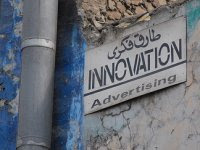 Most ideas that I come up with are not original – a quick Google search normally proves that. That can be demotivating, but it is also exciting and inspiring.
 There are LOTS of great ideas out there. They are free and waiting for you to make them happen. There are entire websites dedicated to spreading free ideas.
Everything is open for improvement. Just because it has been done, does not mean that it has been done well. It might be the user interface, battery life, power consumption, size, shape, speed, connectedness, or any other thing that keeps a product from being amazing and remarkable. Often the process of improvement and constraints you create can yield their own innovations.
Invention is not a prerequisite for innovation. We often get hung up on the need to invent something new. It is unnecessary. Finding a new way to introduce people to an important product is as big an innovation as a new invention.
Action has a higher value than ideas. Ideas which are never implemented are nice ideas, but nothing else. Making something happen – actually solving a problem – improves the lives of your customers and helps to create a better world.
Image courtesy of Paul Keller, licensed under a Creative Commons license.
Tuesday, January 13, 2009
Fast ideas, slow patents
 Making products is more important than making patents. I like the way that Seth Godin put it at the end of this post about selling ideas:
"Side note: the more complicated your idea is, the better off you are patenting it. Dean Kamen made his fortune patenting wheelchairs and other devices that you and I could never hope to build. On the other hand, if your idea is simple enough to dream up in a week, the only way you're going to protect it is to build it, fast and well."Patents are important and have a place in product development, but actually making something important has a far bigger impact on the world. Important does not have to be big or complicated – important solves problems (even small ones) and improves our lives.
In my line of work the whole issue of patents, idea protection and non–disclosure often arises. Protecting an idea in the early conceptual phase is crucially important. At this point anyone that can get hold of the idea has an equal chance of getting an actual product to market – that is why all my communications with clients and potential clients are considered confidential.
There are some problems with trying too hard to protect your idea,
- It may not be worth protecting
Many ideas are not patentable, as prior art already exists. Non–patentable ideas still have value – great beats good, remarkable beats mediocre. Improving on existing products, or turning old ideas into real products are important functions which need to happen continuously.
- It slows things down
While you are busy building a legal fortress around your idea other people are busy building working versions of theirs. Having a market share and being ahead of everyone else may matter more than having the legal rights to an idea which has passed its sell by date.
- Your idea is out there
When you patent something it becomes public – everyone knows what you are doing. Competitors may be able to do something innovative with your ideas sooner than you can.
- It might not work
It is possible to design around patents. If your competitors can come up with their own innovative ways to compete in the same market then your patent may not win you much in the long run. You can still compete, you can still be the best, but what you do keeps you ahead, not a legal document.
- You have to be able to enforce it
Regardless of what legal protection you have you still need to be able to enforce it. That means legal fees – can your afford to pay for your protection? It is certainly necessary in some cases, but which would you rather do: fight legal battles or make things that matter?
You will need to work hard, you will need to stay ahead, and yes, a competitor might just be better than you at it and there will not be any legal papers to throw at them. There is risk involved no matter how you approach it.
There are so many brilliant ideas out there. You probably already know a couple that will change your industry or the way your work. You probably read about one on a blog last week. Making those ideas real is important.
Engineer Simplicity helps companies and people develop ideas into real electronic products. I can help you move your idea from conception through to production. Contact me with your ideas – I will keep them safe and confidential.
Images courtesty of Alexandre Dulaunoy, licensed under a Creative Commons license.
Wednesday, November 12, 2008
Take action. Be a leader
 What you do matters. What you do each day matters. The decisions that you make are important.
Sometimes we forget that our role, our decisions and our actions play an important part in the world around us. It is especially easy to forget when we are faced with overwhelming circumstances or events. Many people who care about the environment feel overwhelmed by the scale of the challenges we face. In that same way many businesses and households are reeling in the face of a global financial crisis.
It is so easy to go into a state of stasis – doing nothing, or just reacting to our immediate challenges. The worst thing to do is nothing. Reacting may mean reducing your budget and cutting out excess spending. It may be reducing your environmental impact by buying less stuff. The problem is that reacting is defensive, like pulling your hand away from a hot stove. If you are always defending you are never going anywhere and standing still is a bad idea in a rapidly changing world.
Responding is better, initiating is best. When we respond we take positive actions, actions which improve our lives rather than deprive them. Environmentalists often go wrong by focussing on what we need to take away rather than on how we can improve and benefit our lives right now, but we know from dieting that deprivation is a temporary solution which leads to overindulgence. Respond by adding positive actions.
When we initiate we go beyond ourselves. We push beyond our own personal boundaries and lead people to new places. Creating new innovative products or processes in a slow market is initiating. Starting a recycling programme within your community (your street or neighbourhood) is initiating. Everyone has the opportunity to be a leader, whether you are a young engineer trying to push new ideas into a big company, or a housewife who wants to create a better life for your family. You may lead just a few people, or many – what matters is that you take action. We need you to lead.
Taking action is difficult and requires consistency and effort, so I would like to leave you with this story about Jerry Seinfeld.
Jerry says that to be a better comic you have to create better jokes, and to create better jokes you have to write everyday. He puts a big calendar on a prominent wall and every day that he fulfills his task of writing a new joke he gets to put a big red cross on the calendar. After a few days of doing this consitently you will have a chain. Jerry says, "Your only job is to not break the chain. Don't break the chain."
Innovate, be consistent, keep taking action, what you do matters. We need you to lead.
Kudos to Seth Godin and his book Tribes which inspired this post. You can get a free audio version of Tribes. Read the book or listen to the audio version – it is a valuable investment of your time and effort.
Subscribe

About this blog

I'm Duncan Drennan and this blog is about spreading ideas regarding engineering, our environment and creating a better world. You can also follow me on Google Reader.
Popular Posts
-
 We are in the middle of an energy crisis and each of us need to make some dramatic changes to ensure that we have electricity, and that the ...
 -
 As engineers we spend a lot of time solving problems. A customer has a problem and it needs to be fixed. The electronic boards you have just...
 -
 eWaste is a particularly difficult issue to deal with as it contains many different materials and lots of extremely hazardous substances. I...
 -
 The short version (my "elevator pitch"): Compact fluorescent lamps (CFLs) use about a fifth of the energy of a normal (incandescen...
 -
 With 48 post over nearly three years, I am certainly not a prolific blog writer. My goal has never been to write a lot, but to rather explor...
 -
 Electronic design automation tools like OrCAD , PADS and Altium Designer are part of an electronic engineer's day–to–day life. We need...
 -
 I am an advocate of making sure that every device consumes as little power as possible at all times. Indicator lights should be off, process...
 -
 Mercury in compact fluorescent tubes (CFLs) is a health hazard and therefore we should not use CFLs....at least that is the false message b...
 -
 I think that it is worth trying to understand some of the reasons we are heading towards a food crisis . The result of all of this deregulat...
 -
The advert ends with the line, "The walls between art and engineering exist only in our minds." There are a couple of ways to inte...